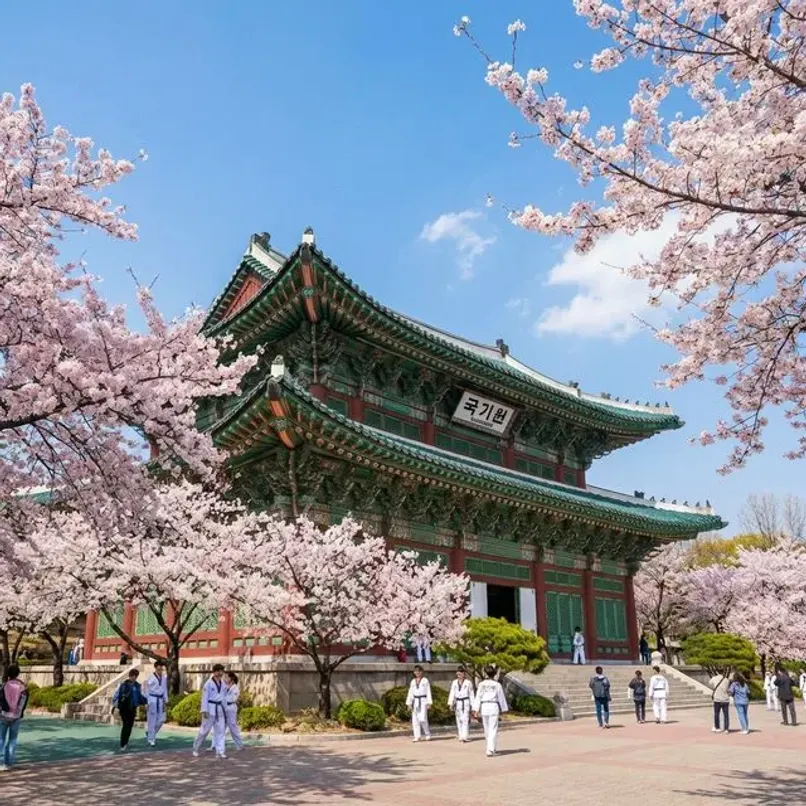
Every champion starts by mastering the basics — and in Taekwondo, the basics live in Poomsae.
The word Poomsae (품새) translates roughly as "form" or "pattern." These are prearranged sequences of techniques — blocks, strikes, stances, and kicks — performed with a level of skill that reveals the true depth of a practitioner's understanding. At Superior Taekwondo, Poomsae is not an afterthought between gradings. It is a dedicated discipline with its own class, its own curriculum, and its own community of passionate practitioners.
Our Poomsae class is open to students of all belt levels, from beginners working through Taegeuk Il Jang to black belts refining the advanced Yudanja series. Whether your goal is to perform flawlessly at your next grading, qualify for a Poomsae tournament, or simply deepen your technical understanding of Taekwondo, this class is for you.
Classes are held at our Helensville dojang, easily accessible from Kaukapakapa, Waimauku, Huapai, and the wider Rodney District.
Understanding Poomsae
In the World Taekwondo (WT) system, Poomsae serves several important functions. First, it is a grading requirement at every rank — from white belt through to black belt and beyond. Each new belt level introduces a new Poomsae that must be performed to a specific standard before promotion is granted.
Second, Poomsae is a competitive sport in its own right. The World Taekwondo organisation runs official Poomsae championships at national and international levels, with age and division categories from juniors to masters.
Third — and perhaps most importantly for long-term development — Poomsae is the training laboratory for technique. Performing a pattern forces you to execute every technique in isolation, making weaknesses visible and fixable. Athletes who neglect Poomsae often hit a ceiling in their technical progression; those who embrace it break through it.
The Taegeuk Series
- ▸ Taegeuk 1 — White/Yellow
- ▸ Taegeuk 2 — Yellow
- ▸ Taegeuk 3 — Yellow/Green
- ▸ Taegeuk 4 — Green
- ▸ Taegeuk 5 — Green/Blue
- ▸ Taegeuk 6 — Blue
- ▸ Taegeuk 7 — Blue/Red
- ▸ Taegeuk 8 — Red/Black
What the Class Covers
Pattern Learning
Step-by-step instruction for each Taegeuk form, broken down into manageable sections with clear instruction on direction, sequence, and technique selection.
Technique Refinement
Detailed correction of stances, chamber positions, extension, breath control, and eye focus. Poomsae reveals every technical detail — and we address them all.
Power & Kihap
Poomsae requires demonstration of power, speed, and spirit. We develop effective muscle activation, correct tension timing, and the confidence to perform with presence.
Rhythm & Flow
A great Poomsae is not a series of isolated techniques — it flows. We work on transitions, pacing, and the rhythm that separates a mechanical performance from an artistic one.
Competition Poomsae
For those pursuing Poomsae competition, we cover judging criteria, expression scoring, and how to adapt technique for both technical and freestyle categories.
Grading Preparation
Focused preparation for upcoming TNZ-aligned gradings. We know exactly what examiners look for and coach students to meet that standard with confidence.
The Benefits of Regular Poomsae Training
Poomsae training delivers benefits that extend far beyond the dojang floor. Here is what consistent practice develops in our students:
Memory & Cognitive Function
Learning complex sequences challenges and strengthens the brain. Students who regularly learn new Poomsae often report improvements in concentration and memory in other areas of life.
Body Awareness & Coordination
Poomsae demands precise control over every limb simultaneously. Over time, this develops exceptional body awareness, spatial intelligence, and coordination.
Balance & Stability
Many Poomsae techniques require single-leg stability and controlled weight transfer. Regular practice significantly improves proprioception and core stability.
Stress Relief & Mind-Body Connection
The focused, meditative quality of Poomsae practice is deeply calming. Many practitioners describe it as a form of moving meditation that clears the mind.
Technical Depth
Every technique that appears in a Poomsae also appears in sparring. Perfecting technique in the controlled environment of patterns accelerates improvement across all aspects of Taekwondo.
Confidence & Presentation
Performing in front of assessors or judges builds composure under observation — a transferable skill that benefits students in school, work, and social situations.
Who Is This Class For?
Grading-Focused Students
You want to go into your next grading feeling completely prepared. We will make sure your pattern is clean, confident, and examiner-ready.
Pattern Enthusiasts
You love the artistry of Taekwondo and want to go deep on technique. Poomsae class is your space to pursue that interest with like-minded practitioners.
Aspiring Competitors
You want to compete in Poomsae tournaments. We will develop your performance skills and help you understand the judging criteria for your division.
Frequently Asked Questions
What is Poomsae?
Poomsae are predetermined sequences of blocks, strikes, and kicks performed against imaginary opponents. They are a core part of World Taekwondo (WT) curriculum and are assessed at every grading from white belt to black belt.
Is Poomsae only for grading purposes?
Not at all. Poomsae is also a competitive discipline in its own right. World Taekwondo hosts Poomsae-specific tournaments at regional, national, and international levels. It is a pathway for athletes who love the technical art of Taekwondo.
Do I need to be flexible to do Poomsae?
No. Poomsae focuses on precision, power, balance, and rhythm rather than extreme flexibility. Flexibility develops naturally over time as a result of regular training.
Can children participate in the Poomsae class?
Yes. Poomsae training is excellent for children as it develops focus, memory, coordination, and discipline. We tailor the approach based on age and belt level.
How does Poomsae help with sparring?
Poomsae develops the mechanical quality of every technique — better chamber, better extension, better balance. Athletes with strong Poomsae foundations typically generate more power and move more efficiently in sparring.
Which Poomsae will I learn?
Students begin with Taegeuk Il Jang (1st form) and progress through all eight Taegeuk forms as they advance through the belt system. Black belts learn the Palgwe and Yudanja series.
Master the Art of Poomsae
Deepen your Taekwondo practice through the timeless discipline of pattern training. Join the Poomsae class at Superior Taekwondo.