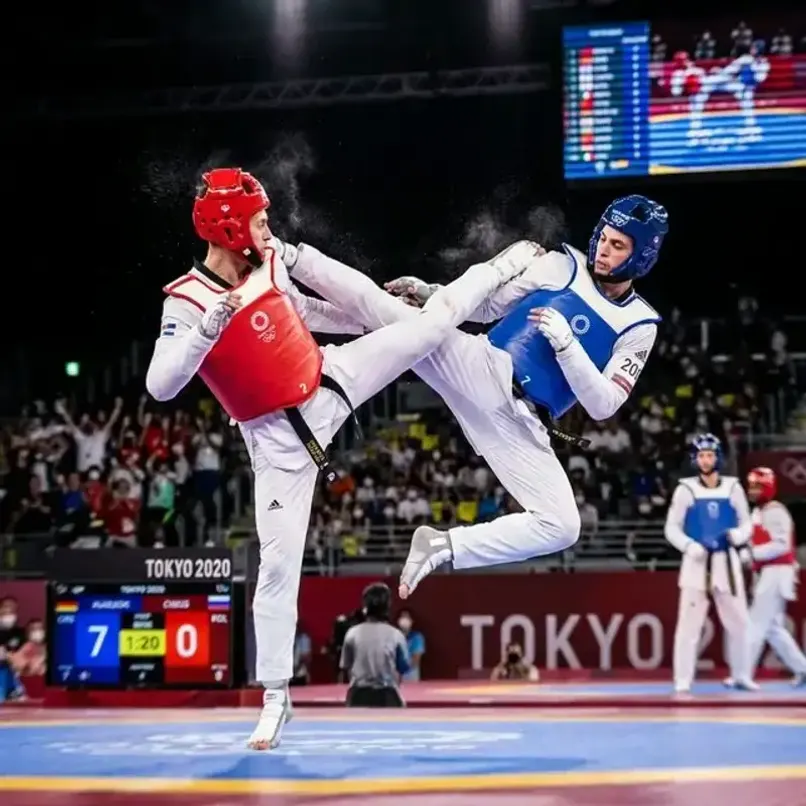
Every four years, the world watches as athletes enter the limelight, showcasing lightning-fast kicks and indomitable spirit. Taekwondo is one of the few martial arts to achieve Olympic status, a testament to its global popularity and dynamic excitement.
At Superior Taekwondo, we practice World Taekwondo (WT), the only style recognized by the International Olympic Committee (IOC). Whether you dream of standing on the podium or just want to train like an Olympian, understanding the sport is essential.
The Road to the Games
Taekwondo's journey to the Olympics was fueled by a desire to unify the martial art globally.
- 1988 Seoul Olympics (Demonstration) Taekwondo made its debut in its homeland of South Korea, wowing audiences with its high-flying techniques.
- 2000 Sydney Olympics (Official Sport) Taekwondo became a full medal sport. This milestone standardized rules and safety equipment worldwide.
- 2012 London Olympics (Electronic Scoring) To eliminate judging bias, the PSS (Protector and Scoring System) was introduced, changing the game to favor precision and speed alongside power.
- 2020 Tokyo Olympics (New Tech) Introduction of 4D replay technology and high-tech uniforms, solidifying Taekwondo as a modern, spectator-friendly sport.
Rules of the Game
Olympic Taekwondo, or Kyorugi, is a fast-paced combat sport. Matches consist of 3 rounds of 2 minutes, with a 1-minute rest in between.
How to Score
- Punch to Trunk protector 1 Point
- Kick to Trunk protector 2 Points
- Kick to Head 3 Points
- Turning Kick to Trunk 4 Points
- Turning Kick to Head 5 Points
- Gam-jeom (Penalty) +1 Point to Opponent
*Turning kicks (spinning) add 2 bonus points to the base technique.
Equipment
Athletes are protected from head to toe:
- Head Guard: Padded helmet with electronic sensors.
- Hogu (Chest Guard): Electronic trunk protector (Blue or Red).
- Forearm & Shin Guards: Hard plastic protection.
- Gloves & Sensing Socks: Special socks contain magnets to trigger the PSS.
- Mouthguard: Mandatory for safety.
Olympic Weight Classes
Unlike many other combat sports, Olympic Taekwondo has consolidated weight classes to ensure the highest level of competition.
Men
- Flyweight: -58kg
- Featherweight: -68kg
- Welterweight: -80kg
- Heavyweight: +80kg
Women
- Flyweight: -49kg
- Featherweight: -57kg
- Welterweight: -67kg
- Heavyweight: +67kg
Your Pathway to the Podium
At Superior Taekwondo, we provide the foundation for Olympic dreams. Our Competition Team training mirrors the intensity and strategy of elite level sport.
Mastering the cut-kick, clinch work, and head-kick flexibility essential for modern sparring.
Learning ring management, score protection, and timing.
Plyometrics, cardio, and core strength specifically for Taekwondo athletes.
Olympic FAQ
Is Taekwondo an Olympic sport?
Yes, World Taekwondo (WT) style has been an official full-medal Olympic sport since the 2000 Sydney Games.
How do you score points in Olympic Taekwondo?
Points are scored by landing valid kicks and punches on the opponent's electronic trunk protector (hogu) or head gear. A kick to the body is 2 points, a turning kick to the head is 3 points, and spinning kicks earn additional points.
What is the PSS (Protector and Scoring System)?
The PSS is an electronic system used in Olympic Taekwondo. Sensors in the socks and protectors automatically register points when a strike impacts with sufficient force and accuracy, ensuring fair scoring.
What are the Olympic weight classes?
For the Olympics, there are 4 weight categories for men (-58kg, -68kg, -80kg, +80kg) and 4 for women (-49kg, -57kg, -67kg, +67kg). These differ slightly from World Championship weight classes.
Can I train for the Olympics at Superior Taekwondo?
Absolutely. We follow the official World Taekwondo curriculum and rules. Our competition team training is designed to prepare athletes for the pathway from local tournaments to national selection and international competition.