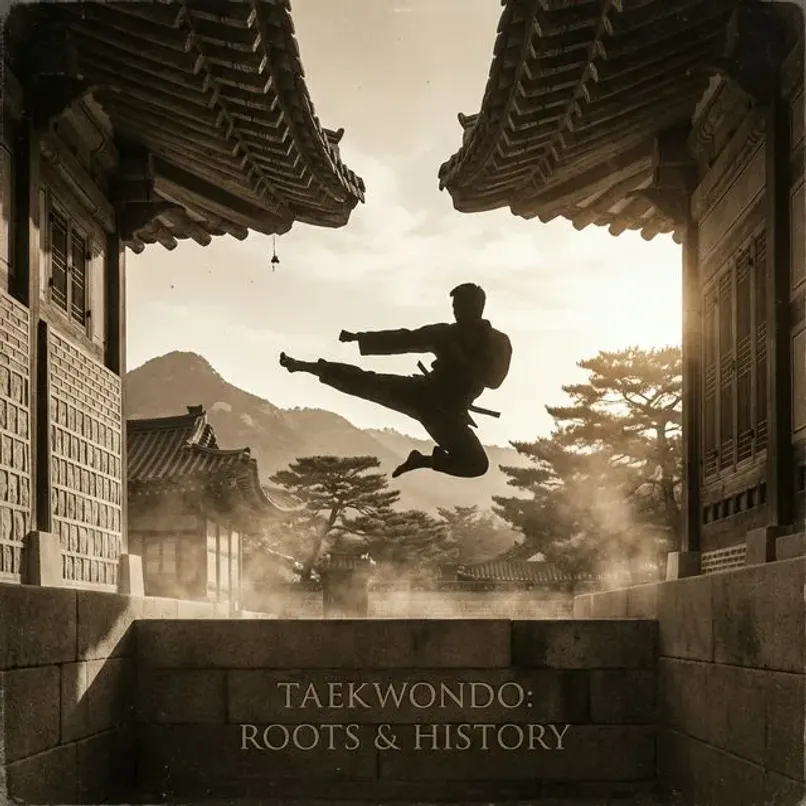
Taekwondo is more than just a sport; it is a discipline, an art form, and a way of life. Originating in Korea, it has grown to become the most widely practiced martial art in the world.
Literally translated, Tae (태) means "to stomp" or "to strike with the foot"; Kwon (권) means "fist" or "to strike with the hand"; and Do (도) means "way" or "art". Thus, Taekwondo is "The Way of the Foot and Fist".
At Superior Taekwondo, we honor these roots while training for the future. Whether you are in Kaukapakapa, Helensville, or Waimauku, understanding what you are practicing is the first step to mastery.
A Brief History: From Kingdom to Olympics
The origins of Taekwondo can be traced back over 2,000 years to the Three Kingdoms of Korea (Goguryeo, Baekje, and Silla). Ancient warriors, such as the Hwarang, practiced unarmed combat techniques known as Subak and Taekkyeon, emphasizing kicking and agility.
During the Japanese occupation of Korea (1910-1945), traditional martial arts were suppressed. However, masters secretly kept the traditions alive, sometimes blending them with influences from Karate. After liberation in 1945, the major martial arts schools (Kwans) united. In 1955, the name "Taekwondo" was officially chosen to unify these styles.
The establishment of the World Taekwondo Federation (WT) in 1973 marked a turning point. Taekwondo evolved into a dynamic modern sport, debuting as a demonstration sport in the 1988 Seoul Olympics and becoming an official medal sport at the 2000 Sydney Olympics. Today, it is practiced by millions worldwide, bridging the gap between traditional discipline and modern athleticism.
The 5 Tenets of Taekwondo
The physical techniques are only half the battle. A true Taekwondo practitioner strives to embody these five tenets in their daily life.
1. Courtesy (Ye Ui)
To be polite to one another, respect instructors and seniors, and foster a sense of justice and humanity.
2. Integrity (Yom Chi)
To distinguish right from wrong and have the conscience to feel guilt if one has done wrong.
3. Perseverance (In Nae)
To overcome difficulties and not give up. Success belongs to the patient and the persistent.
4. Self-Control (Guk Gi)
To control one's emotions and actions, both inside and outside the dojang (training hall).
5. Indomitable Spirit (Baekjul Boolgool)
To show courage when facing injustice or difficulty, regardless of the odds.
The Belt System
The Taekwondo belt system symbolizes a student's growth and progression. Just as a tree grows from a seed, a student grows in knowledge and skill.
- White Belt: Innocence. A beginner with no prior knowledge.
- Yellow Belt: Earth. The seed is planted and roots enter the ground.
- Green Belt: Plant. The plant begins to grow as skills develop.
- Blue Belt: Sky. The plant grows towards the heavens as potential is realized.
- Red Belt: Danger. A warning to the student to exercise control and to opponents to stay away.
- Black Belt: Maturity. Impervious to darkness and fear. The beginning of a new journey.
"A black belt is just a white belt who never quit."
At Superior Taekwondo, grading exams are held periodically to test students on patterns (Poomsae), sparring, self-defense, and board breaking. Achieving a Black Belt is a prestigious milestone recognized internationally.
Technical Aspects: What You Will Learn
Dynamic Kicking
Taekwondo is famous for its high, fast, and spinning kicks. You will master:
- Front Kick (Ap Chagi): The foundation of all kicks.
- Turning Kick (Dollyo Chagi): Powerful and versatile.
- Side Kick (Yop Chagi): A devastating thrusting kick.
- Back Kick (Dwi Chagi): A high-power counter-attack.
- Axe Kick (Naeryeo Chagi): bringing the leg down on the opponent.
Poomsae (Patterns)
Poomsae are pre-arranged sequences of movements attacking and defending against imaginary opponents. They are the "textbook" of Taekwondo, teaching balance, breath control, and precision. We teach the official World Taekwondo Taegeuk forms.
Explore PoomsaeKyorugi (Sparring)
This is the sport side of Taekwondo seen in the Olympics. Students wear protective gear and compete to score points by landing kicks to the hogu (chest guard) or head. It develops reaction time, strategy, and courage.
Join Competition TeamSelf-Defense (Hosinsul)
Beyond the sport, we teach practical self-defense. This includes wrist releases, locks, and creating distance from an attacker. The goal is always to protect oneself and escape to safety.
Transforming Body and Mind
Physical Benefits
- ✓ Cardiovascular Health: Intense training improves heart and lung function.
- ✓ Flexibility: Extensive stretching prevents injury and improves agility.
- ✓ Strength: Core, leg, and upper body strength are developed naturally.
- ✓ Coordination: Complex movements enhance motor skills and balance.
Mental Benefits
- ✓ Confidence: Achieving belt ranks builds self-esteem.
- ✓ Focus: Learning patterns requires deep concentration.
- ✓ Stress Relief: Physical exertion is an excellent outlet for stress.
- ✓ Discipline: Respect for protocol translates to better habits in life.
The Superior Taekwondo Difference
Why choose us? Because we believe in "Constructing Champions" not just in the ring, but in life. Based in the heart of North West Auckland, we are dedicated to our communities in Helensville, Kaukapakapa, and Waimauku.
Our instructors are passionate about mentoring the next generation. We don't just teach you how to kick; we teach you how to set goals, work hard, and treat others with respect. Whether you are a 5-year-old Tiny Tiger or an adult looking for a new challenge, there is a place for you on our mat.
Common Questions
What does 'Taekwondo' mean?
Taekwondo translates to 'The Way of the Foot and Fist'. 'Tae' means to smash with the foot, 'Kwon' means to destroy with the hand, and 'Do' means the art or way.
Is Taekwondo good for self-defense?
Yes, Taekwondo is highly effective for self-defense. It teaches distance management, powerful strikes, and improved awareness. At Superior Taekwondo, we integrate practical self-defense techniques alongside sport training.
At what age can children start Taekwondo?
Children can start as young as 4 years old in our Tiny Tigers program. This age is perfect for developing coordination, balance, and listening skills.
How long does it take to get a Black Belt?
On average, it takes 3-5 years of consistent training to achieve a 1st Dan Black Belt. The journey depends on the student's dedication, frequency of training, and mastery of the curriculum.
Do I need to be flexible to start?
No! Flexibility is a result of training, not a requirement to start. Our classes include dedicated stretching routines to help you improve your range of motion safely over time.
Ready to Start Your Journey?
The best way to understand Taekwondo is to experience it. Join us for a class and discover what you are capable of.
Join Superior Taekwondo Today