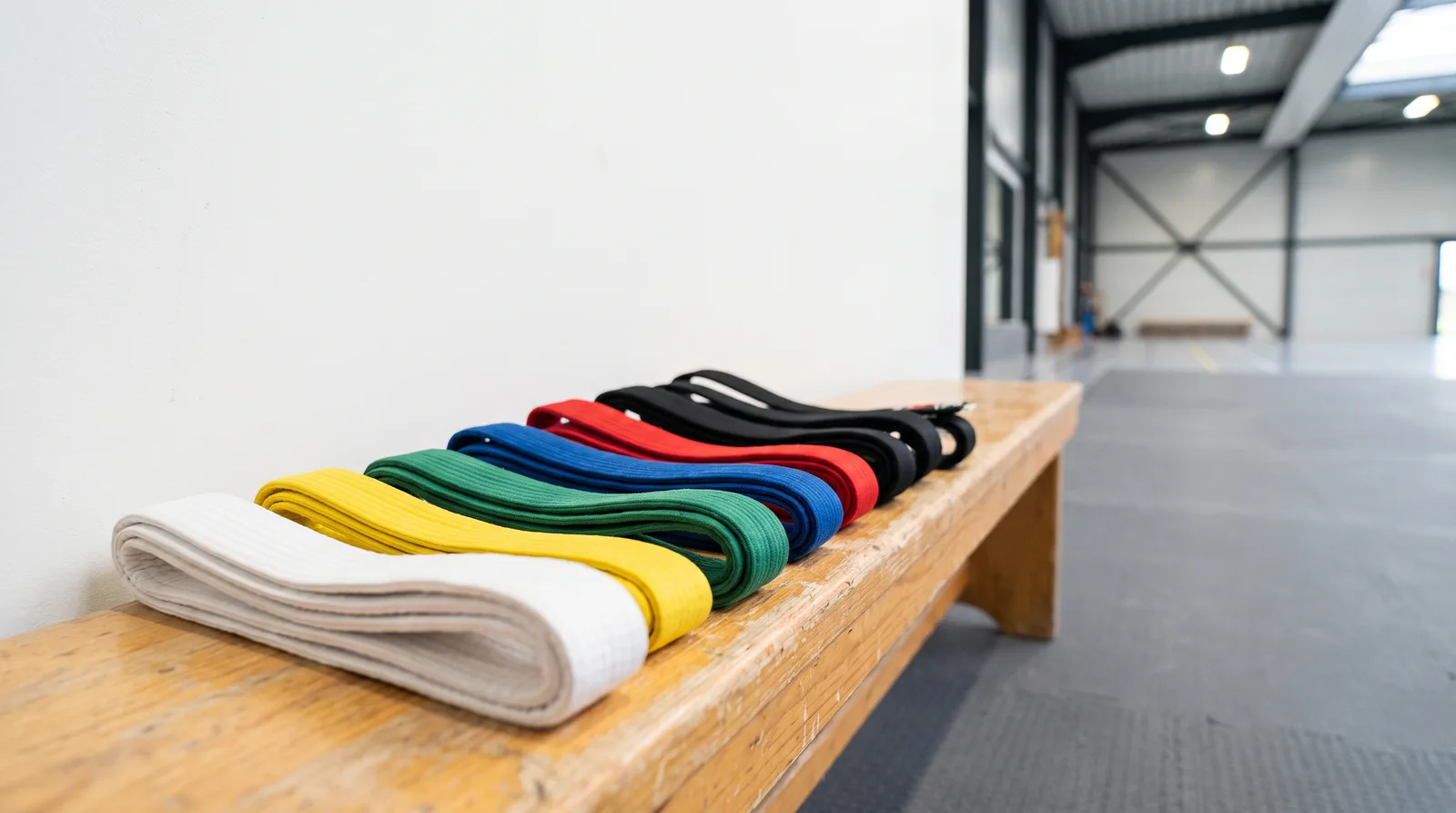
West Auckland has no shortage of kids' martial arts clubs, and the options can look fairly similar from the outside — a mat, a belt system, a coach in a uniform. The differences that actually matter for your child are usually underneath that surface. Here is what to look at before you choose.
The Three Main Options and What They Teach
Karate
Traditional Karate styles focus on linear strikes, blocks and kata — set patterns of movement performed solo. Many clubs place a strong emphasis on discipline and precision from the first grading.
Taekwondo
Taekwondo is built around fast, powerful kicking and Olympic-style sparring, alongside patterns (poomsae) and self-defence basics. World Taekwondo clubs follow the same curriculum used at Olympic level, scaled to a child's age and grade.
MMA
Mixed martial arts for kids usually blends striking with basic grappling. Programmes vary a lot between gyms, so it is worth asking exactly what is taught to under-12s versus what is shown in adult classes.
None of the three is objectively "better" for a child — the right one is usually whichever style holds their attention and whichever club has a coach who genuinely enjoys teaching kids.
It is also worth watching a class before deciding, if a club allows it. Reading about a style on a website only tells you so much — seeing how a coach actually talks to a group of children, and how the kids respond, usually tells you more in ten minutes than any description can.
What to Look for in the Coach
The style matters less than the person leading the class. A few practical things to check before you join:
- Actual rank and credentials. Ask what grade the coach holds and how long they have been teaching, not just training.
- National body affiliation. For Taekwondo, that means checking whether the club is affiliated with World Taekwondo (WT), the sport's Olympic governing body. Superior Taekwondo, for example, has been a World Taekwondo club since it was founded in 2016, and head coach Andrea Kilday is a 3rd Dan and WT Level 2 coach.
- Real competition experience, as one example. This is not a claim that every good coach has competed internationally — plenty of excellent kids' coaches have not. But it is one useful data point. Andrea competed at the Rio 2016 Olympics in the -49kg division and won gold at the 2015 Pacific Games, which is the kind of experience that shows up in how a class is actually coached.
- A children's class, not a shrunk adult class. Watch a session if you can. Good kids' coaching looks different from adult coaching — shorter drills, more structure, and games built around the same techniques.
Class Sizes, Ages and Belts
Ask how a club actually splits its age groups. At Superior Taekwondo, for example, Little Superior Legends takes 4 and 5-year-olds, Youth Superior Legends covers ages 6 to 11 across all belts, and Cadets, Juniors and Seniors covers 12 and up. Keeping the age bands this tight means a 5-year-old is not training alongside a 12-year-old doing the same drills at the same intensity.
You can see how any club structures its week on its own class page — it is a fair way to compare how seriously different clubs treat age-appropriate coaching.
Costs and Trial Policies to Compare
Pricing structures vary between clubs, so compare like for like — weekly fees, sign-up costs, and whether unlimited training is offered. As a benchmark, Superior Taekwondo starts from $30 a week for one class or $40 a week unlimited, plus a one-off $25 sign-up fee, with 10-week term options at $300 or $400 and a $285 concession card valid for five months.
Just as importantly, check the trial policy. A club that is confident in its coaching will usually let you try a class before you pay for a term — Superior Taekwondo's first class is free, with no obligation.
Questions to Ask on Your First Visit
- How long have you been coaching children specifically?
- What happens in a typical class from start to finish?
- How do you handle a child who is struggling to keep up, or one who is far ahead?
- Is there a free or low-cost trial, and what happens after it?
- What does the belt or grading pathway actually look like?
Frequently Asked Questions
What is the best martial art for kids in West Auckland?
There is no single best option — Karate, Taekwondo and MMA each teach different things. Taekwondo is known for its kicking and Olympic sparring style, Karate for linear striking and kata, and MMA for a mix of striking and grappling. The right choice usually comes down to which class your child enjoys and which coach they respond to.
What should I look for in a kids' martial arts coach?
Look at the coach's actual credentials — their grading rank, any national governing body affiliation such as World Taekwondo, and how they run a children's class specifically, not just an adult one. Competition experience at a genuine level, such as an Olympic Games, is one sign of depth of knowledge, though it is not the only thing that makes a good kids' coach.
How much do kids' martial arts classes cost in Auckland?
Costs vary by club, but as a guide, Superior Taekwondo starts from $30 a week for one class, or $40 a week for unlimited training, plus a $25 sign-up fee. Most reputable clubs also offer a free or low-cost trial class, which is worth using to compare before you commit to a term.
See It for Yourself
If you are comparing clubs across West Auckland, the easiest test is a trial class. Superior Taekwondo in Helensville offers a free first class, Olympian-coached.